Decoding Sequence Patterns in European Wheel Formats During Extended Online Play Sessions
Written by Nils Lorenz · Sep 21, 2026

Decoding Sequence Patterns in European Wheel Formats During Extended Online Play Sessions
European wheel formats operate with thirty-seven pockets that include a single zero alongside numbers one through thirty-six, and researchers continue to analyze how sequences develop across extended online sessions where thousands of spins occur in rapid succession. Data from multiple platforms shows that each spin remains independent under certified random number generators, yet analysts track frequency distributions and cluster formations to verify adherence to expected probabilities over time.
Core Mechanics of European Wheel Configurations
European wheels differ from their American counterparts through the absence of a double zero, which lowers the house edge to approximately 2.7 percent according to standard probability calculations, and this structure influences how sequence patterns manifest during prolonged play periods. Observers note that physical wheel biases documented in earlier decades rarely transfer to online environments, where digital generators replace mechanical components entirely.
Software providers subject European format implementations to rigorous testing protocols established by regulatory bodies, and certification processes examine millions of simulated outcomes to confirm uniform distribution across all pockets. In September 2026, updates from the Malta Gaming Authority highlighted revised sampling requirements for online wheel generators that now incorporate longer sequence verification windows.
Sequence Analysis Methods in Digital Environments
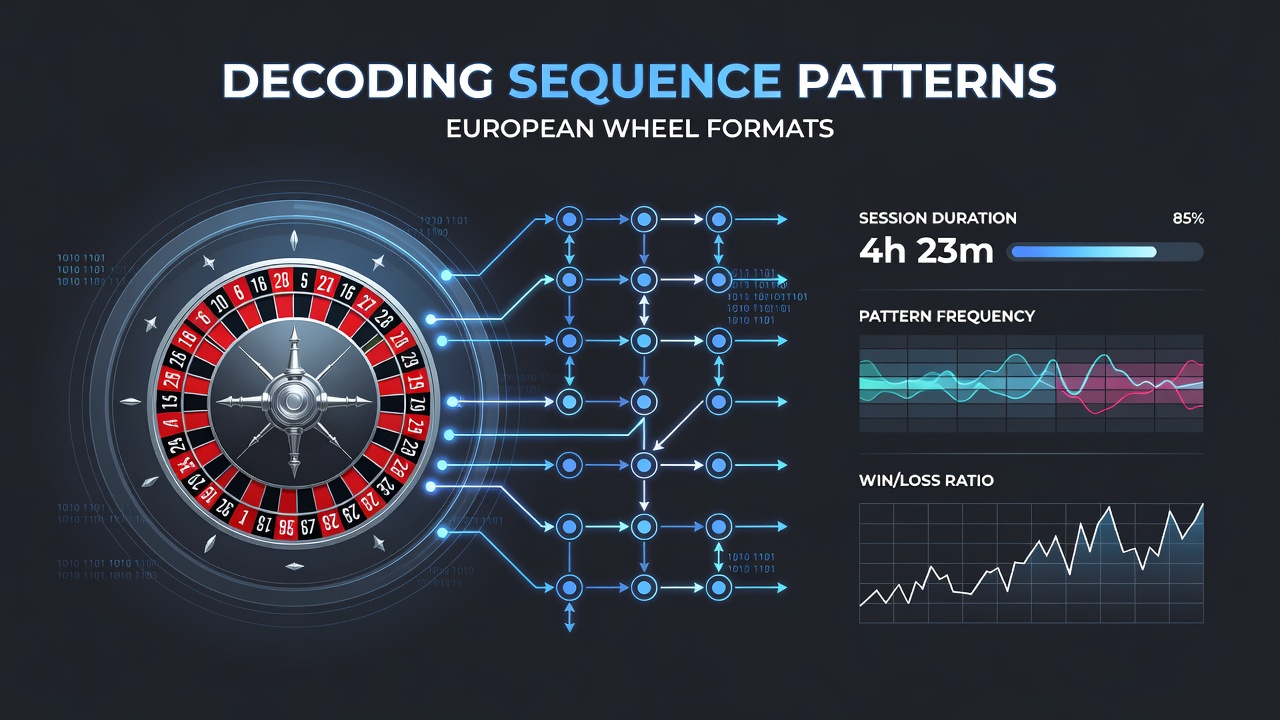
Analysts employ Markov chain models and frequency mapping techniques to examine runs of consecutive outcomes, while statistical software processes data sets collected from extended sessions that span several hours or more. These methods reveal that apparent clusters of high or low numbers align with theoretical expectations rather than indicating exploitable trends, and platforms maintain audit logs that allow independent verification of sequence integrity.
One study released through Australian gambling research channels examined over two million spins across European format tables and confirmed that deviation rates stayed within acceptable variance thresholds throughout multi-hour periods. External verification partners review these logs regularly to ensure compliance with fairness standards set by international gaming associations.
Regulatory Oversight and Testing Standards
Regulatory frameworks across the European Union require operators to implement continuous monitoring systems that flag any statistical anomalies during live sessions, and these systems compare real-time outcomes against baseline probability tables. The European Commission has published guidelines that encourage standardized reporting of sequence data from certified platforms, enabling cross-border comparisons of performance metrics.
Canadian provincial regulators have adopted similar approaches through their gaming control boards, requiring quarterly submissions that detail sequence behavior over extended play intervals. Such requirements ensure that any deviation beyond established confidence intervals triggers further investigation by independent laboratories.
Practical Implications for Extended Sessions
Players encounter European wheel formats in live dealer streams and automated RNG tables alike, and session length directly affects the volume of sequence data available for review. Research indicates that patterns observed after five hundred spins typically stabilize closer to theoretical distributions than those seen in shorter bursts, although individual outcomes continue to follow random distribution principles.
Industry reports from organizations such as the European Gaming and Betting Association document how extended play influences the visibility of normal variance without creating predictable sequences. Platforms integrate these findings into their internal monitoring dashboards, which track metrics like longest runs and repeat frequencies across all active tables.
Conclusion
Sequence pattern analysis in European wheel formats during extended online sessions rests on established mathematical foundations and regulatory verification processes that maintain outcome integrity across platforms. Data collected from certified systems continues to demonstrate consistency with probability models, while ongoing oversight from multiple jurisdictions supports transparent evaluation of digital wheel performance.